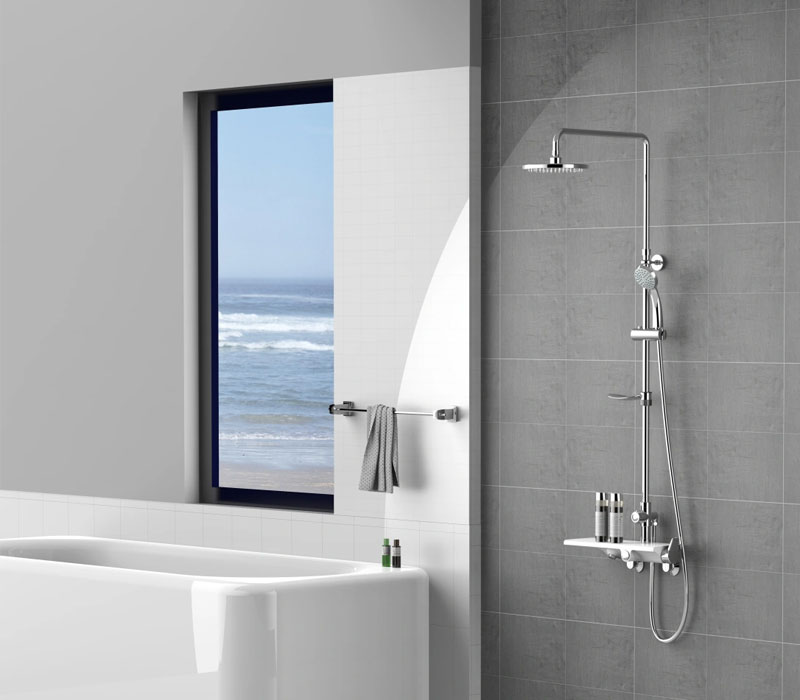
A bridge kitchen faucet uses a visible horizontal connection between separate hot- and cold-water controls and a central spout. Its traditional appearance suits classic, transitional and selected commercial interiors, but buyers must confirm mounting holes, center distance, valve configuration and local plumbing requirements before ordering.
What Is a Bridge Kitchen Faucet?
A bridge kitchen faucet typically has two handles connected above the sink deck by an exposed bridge. Hot and cold water mix within the bridge before reaching the spout. Designs vary: some mount on the countertop, while others mount through a sink deck or wall. Product drawings should be used to verify the actual layout.
How Bridge and Single-Handle Faucets Differ
The main differences are control style, mounting requirements and visual character. A single-handle faucet normally needs fewer mounting holes and allows one-handed temperature adjustment. A bridge faucet separates hot and cold controls and makes the water path a visible design feature.
| Factor | Bridge faucet | Single-handle faucet |
|---|---|---|
| Controls | Separate hot and cold handles | One combined control |
| Mounting | Usually multiple holes | Often one or two holes |
| Temperature adjustment | Two-handle operation | One-handed operation |
| Design character | Exposed, traditional or transitional | Broad range from minimal to traditional |
| Planning priority | Hole spacing and bridge dimensions | Clearance and handle movement |
Mounting Holes and Center Distance
Do not select a bridge kitchen faucet from photos alone. Confirm the required number of holes, the center-to-center distance between handles, deck thickness and the diameter of each opening. Existing sinks may not match a new faucet, and drilling additional holes may not be suitable for every material.
Spout Height, Reach and Sink Clearance
Spout reach should place the water stream near the useful center of the bowl without causing splash. Measure from the faucet mounting line to the sink center. Also check spout height against window sills, shelves and wall cabinets. For island installations, review the faucet from all viewing angles.
Materials, Valves and Finish Selection
Ask suppliers to identify the materials used for the body, waterway, spout, handles and connectors. Valve type, seal availability and replacement components matter as much as the visible finish. Chrome, brushed, polished and dark finishes can have different cleaning requirements; follow the manufacturer’s care instructions.
Optional Side Sprays and Pull-Down Functions
Some bridge kitchen faucet configurations include a separate side spray, while others integrate a pull-down outlet. Verify the extra mounting hole, hose length, docking method and diverter operation. In commercial or hospitality settings, simple controls and replaceable wear parts can reduce maintenance complexity.
Water Pressure and Local Compliance
Performance depends on site pressure, supply connections and the faucet’s internal flow path. Request the recommended working-pressure range and flow information. Buyers are responsible for confirming applicable plumbing, potable-water and flow requirements in the destination market; specifications should not rely on a generic “water-saving” claim.
Installation and Maintenance Planning
A professional installer should confirm supply alignment, mounting access and sealing requirements. Leave enough space below the sink to tighten mounting hardware and service hoses. Periodically clean the aerator with methods approved for the finish, inspect connections for leaks and keep model information for replacement-part orders.
Bridge Kitchen Faucet Procurement Checklist
- Record the sink or countertop hole pattern.
- Confirm handle center distance and deck thickness.
- Measure required spout reach and height.
- Specify body materials, valve type and finish.
- Confirm side-spray or pull-down requirements.
- Request pressure, flow and connection information.
- Approve a sample before volume purchasing.
- Confirm packaging, spare parts and after-sales support.
Explore Qizhou’s bathroom and faucet product range and review project applications when preparing a specification.
Frequently Asked Questions
How many holes does a bridge kitchen faucet need?
Many designs require three holes for two handles and one spout, while a side spray may require another. Always check the manufacturer’s drawing because layouts vary.
Can a bridge faucet replace a single-hole faucet?
Only if the sink or countertop can support the required hole pattern and spacing. An installer should assess the existing material and plumbing before modification.
Is a bridge faucet suitable for a commercial kitchen?
It may suit selected hospitality or light-commercial applications, but buyers should prioritize cleaning, control simplicity, replacement parts, required flow and local compliance.
What measurements are needed before ordering?
Record hole count, center distance, deck thickness, spout reach, spout height, sink dimensions and clearances around windows, shelves and cabinets.
How should a bridge kitchen faucet be cleaned?
Use a soft cloth and a cleaner approved for the specific finish. Avoid abrasive tools and harsh chemicals, and follow the supplier’s instructions for aerator maintenance.
Request Specifications or a Project Quote
Send Qizhou your mounting dimensions, preferred finish, target market and estimated quantity. We can help compare suitable faucet configurations and prepare a quotation. Contact Qizhou Bathroom with your project requirements.